The Genesis of the "Musk Effect" on German Politics
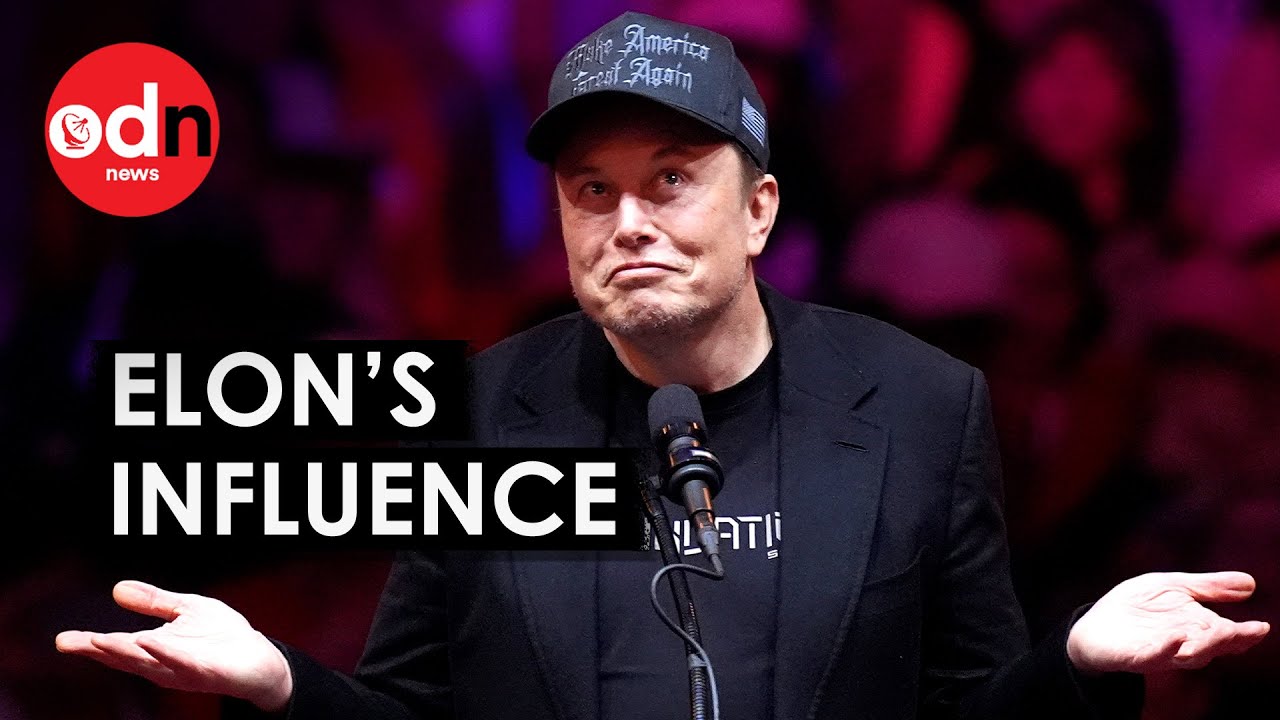
The political landscape in Germany, perpetually dynamic, has found itself navigating an unexpected tremor in recent months: the so-called "Musk Effect." This phenomenon centers around the actions and pronouncements of tech billionaire Elon Musk, owner of the social media platform X (formerly Twitter), and their perceived impact on the Alternative for Germany (AfD) party, particularly as the nation gears up for crucial elections. The debate surrounding his interventions has been so intense that the German government has openly accused him of "interference," sparking a wider discussion about the intersection of global tech influence and national sovereignty.
The first significant ripple emerged just before Christmas when Musk, never shy about sharing his opinions, declared that "only the AfD can save Germany." This stark statement, coming conveniently ahead of the early Bundestag election campaign, sent shockwaves through the German political establishment. Despite the immediate and widespread condemnation from politicians across the spectrum, Musk doubled down on his support. He published a controversial guest commentary in the prominent German newspaper
Welt am Sonntag, further cementing his stance. The crescendo of his engagement culminated in a live conversation on his own platform, X, with AfD's lead candidate, Alice Weidel. These successive acts have ignited a fierce debate: Is Musk merely exercising his right to free speech, or is he actively leveraging his immense platform and personal influence to manipulate Germany's electoral process, potentially leading to an
afd überrascht wahl outcome?
X as an Amplifier: The Platform's Role in Shaping Discourse
The core of the "Musk Effect" lies not just in the words spoken, but in the vehicle through which they are delivered: X. As the owner of the platform, Musk possesses an unparalleled ability to amplify messages, a power that transcends that of a mere high-profile user. Critics argue that his interactions with the AfD, especially the live talk with Alice Weidel, go beyond typical media engagement. These events, they contend, offer a veneer of legitimacy and a massive, unfiltered reach to a party that many mainstream German politicians actively avoid due to its extremist views.
The technical mechanics of X itself come under scrutiny here. LobbyControl's Aurel Eschmann highlights that it's not simply the interview that could be problematic, but the *reach* provided by the platform, particularly the ability to intentionally boost posts. Eschmann points out, "Musk is not just a user with many followers on X, but the owner of the platform. There are numerous indications that his posts are artificially gaining reach – even with users who don't follow him." This suggests a systemic amplification beyond organic engagement. Data scientists from Bundesdatenschau have provided compelling evidence, revealing that Alice Weidel's posts experienced a drastic surge in impressions, averaging 1 million over two weeks, a significant leap from her previous average. This algorithmic boost potentially exposes the AfD's narrative to a far wider audience than they might otherwise command, raising questions about fairness and equal access in the digital political arena. The discussion extends into whether such platform-owner-driven amplification could even be construed as an illegal party donation, effectively providing an in-kind benefit that traditional campaigns would have to pay for. This unique dynamic puts a spotlight on the evolving challenges of election oversight in the digital age. For deeper insights into this complex issue, consider reading
Election Interference? Elon Musk, AfD, and the X Platform Debate.
Navigating Controversy: Free Speech vs. Election Interference
The controversy surrounding Musk's actions highlights a fundamental tension: the boundaries of free speech versus accusations of election interference. German Chancellor Olaf Scholz responded directly to Musk’s personal insults with a succinct piece of advice: "Don't feed the troll." This sentiment encapsulated the government's frustration. Official statements from the German government have indicated that Musk's comments could be interpreted as "election influencing."
However, German law protects free speech, provided statements do not contain insults, defamation, or incitements to hatred. This constitutional protection makes it challenging to legally constrain Musk's individual pronouncements. The situation becomes considerably more complex, however, when Musk, as the platform owner, or X, as the company, actively promotes a specific party. The distinction between a private citizen's opinion and the curated amplification by a powerful media platform owner is crucial. The concern isn't just about what Musk *says*, but what X *does* to amplify those statements and the AfD's message.
The AfD itself adds layers to this complex debate. Even among Europe's diverse spectrum of right-wing parties in the European Parliament, the AfD is often deemed "too extreme" for collaboration. Germany’s domestic intelligence agency, the Verfassungsschutz, has officially classified the AfD as a "right-wing extremist suspect case," underscoring the severity with which its ideology is viewed within the country. Established parties have historically maintained a *Brandmauer* (firewall) against the AfD, refusing to cooperate with them due to the extreme views of many members and documented links to neo-Nazi organizations. Musk's actions, by engaging directly and publicly, are seen by critics as normalizing a party that many believe poses a threat to democratic values, potentially making an
afd überrascht wahl scenario more plausible in the eyes of some voters.
Beyond the Digital Echo Chamber: Public Outcry and Electoral Realities
While the digital sphere buzzes with Musk's pronouncements and AfD's amplified messages, the real-world sentiment in Germany presents a stark counter-narrative. The perceived normalization of the AfD has galvanized significant public opposition. Mass protests against the far-right party have swept across Germany, drawing hundreds of thousands to the streets. These demonstrations, transcending political affiliations, have seen prominent figures from various sectors, including sports, speaking out. For instance, after Borussia Dortmund's victory against Cologne, Dortmund coach Edin Terzić noted the parallel of 30,000 people protesting in Dortmund, while Hamburg saw a record 80,000 demonstrators. Figures like Freiburg coach Christian Streich and football legends Uli Hoeneß and Timo Hübers have also publicly condemned the AfD, emphasizing the role of public figures in addressing the nation's political situation.
Despite the digital amplification and the fierce public debate, the electoral impact remains uncertain. A recent Forsa survey indicates that while the AfD could secure around 20 percent of the vote, their electoral intention has remained remarkably constant for the past year. This consistency suggests that while Musk's actions might amplify existing support or influence perception, they might not be directly translating into a dramatic surge in new votes. Critics of the "Musk Effect" argue that his interventions might primarily be resonating within an already sympathetic echo chamber, rather than swaying undecided voters or drawing in a new demographic. Nevertheless, the sustained 20% support, amidst such intense controversy and widespread protests, itself represents a situation where an
afd überrascht wahl outcome is a constant specter for the established parties. It highlights a segment of the electorate that, despite all external pressures, remains committed to the AfD. The sheer scale of public protest, as detailed in
German Outcry: Mass Protests Against AfD Amid Political Normalization Fears, provides an important counterbalance to the digital narrative.
The Enduring Impact: What Does the "Musk Effect" Mean for German Democracy?
The "Musk Effect" is more than just a fleeting controversy; it represents a significant challenge to the norms of democratic discourse and election integrity in Germany and potentially beyond. While the direct electoral consequences of Musk's interventions remain to be fully quantified, his actions have undeniably injected a polarizing force into the German political conversation. They force a critical examination of the power wielded by global tech platforms and their owners, and the complex interplay between free speech, algorithmic amplification, and potential election interference.
The consistent 20% support for the AfD, even amidst accusations of extremism and widespread public condemnation, underscores a deeper societal challenge that transcends any single external influence. This sustained level of support itself could be seen as an
afd überrascht wahl scenario, where the party holds ground despite intense pressure. Practical takeaways from this unfolding drama include the urgent need for robust media literacy education to help citizens critically evaluate information presented on social platforms. It also necessitates ongoing vigilance from regulatory bodies to scrutinize algorithmic practices that might disproportionately amplify certain political voices. Ultimately, the "Musk Effect" serves as a stark reminder that in the digital age, the battlefield for hearts and minds is global, and the guardians of democracy must adapt to defend its integrity against new, technologically sophisticated forms of influence.